


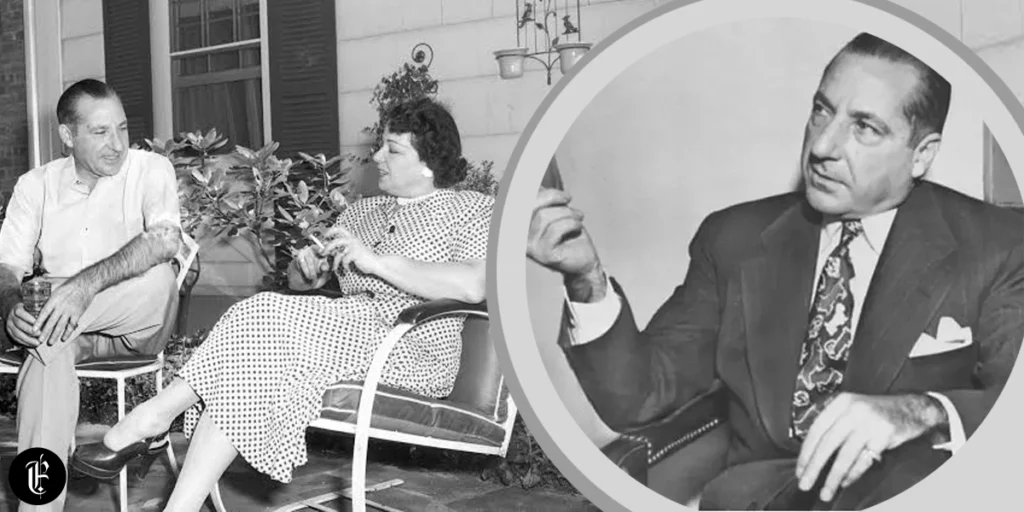
Lauretta Giegerman, more accurately recorded in many historical references as Loretta “Bobbie” Geigerman Costello, remains one of the least documented spouses connected to a major figure in American organized crime. While her husband, Frank Costello, became a public symbol of Mafia influence, Lauretta lived almost entirely outside the spotlight.
Her life is not defined by public achievements or media presence. Instead, it is defined by absence—few interviews, limited photographs, and very little personal testimony. What remains is a quiet historical outline of a woman who spent nearly six decades married to one of the most powerful underworld figures in the United States.
Profile Summary
| Field | Details |
|---|---|
| Full Name | Loretta “Bobbie” Geigerman Costello |
| Common Search Name | Lauretta Giegerman |
| Birth Date | October 28, 1894 (unconfirmed but widely cited) |
| Birthplace | New York, United States |
| Ethnic Background | German-Jewish family |
| Spouse | Frank Costello (Francesco Castiglia) |
| Marriage Date | September 1914 |
| Age at Marriage | Around 19 years old |
| Children | None recorded |
| Occupation | Reported former showgirl |
| Residence | Central Park West, Manhattan; summer home in Sands Point |
| Height | Not documented |
| Net Worth | Not independently recorded |
| Social Media | None (historical figure) |
| Death Date | Uncertain in public records |
Who Was Lauretta Giegerman?
The name Lauretta Giegerman appears widely in modern searches, but historical records more often use Loretta Geigerman or “Bobbie” Geigerman. This variation in spelling is common in early 20th-century documentation, where names were frequently recorded inconsistently.
Genealogical sources suggest she was born on October 28, 1894, in New York City, into a German-Jewish immigrant family. These details are drawn from memorial databases and family records, though such sources should always be treated carefully when not supported by official documents like census or birth certificates.
Her identity in history is almost entirely tied to her marriage to Francesco “Frank” Castiglia, later known as Frank Costello. He was born in Calabria, Italy, in 1891 and immigrated to the United States as a child. Over time, he became a central figure in organized crime, eventually associated with the Luciano crime family.
Unlike her husband, Lauretta did not build a public identity. There is no verified record of her giving interviews, publishing memoirs, or participating in public life beyond her role as his wife.
Her Early Years
Very little verified information exists about Lauretta’s childhood. Most available records only confirm her birth in New York and her family’s immigrant background. Like many children of immigrant families in late 19th-century New York, she likely grew up in a rapidly changing urban environment shaped by industrial growth and cultural diversity.
However, specific details such as her education, early ambitions, or family structure are not reliably documented. Many online biographies attempt to fill these gaps, but without primary records, such claims remain speculative.
One of the few contemporary references to her early life comes from a 1949 Time magazine profile of Frank Costello, which described her as a former showgirl. The article did not provide details about where she performed or how long she worked in theater.
The term “showgirl” in that era could refer to chorus-line performers, musical revue dancers, or stage entertainers in New York’s vibrant theater scene. Without supporting records such as playbills or theater contracts, her exact role in entertainment history remains unclear.
Meeting Frank Costello
The exact circumstances of how Lauretta met Frank Costello are not clearly documented. Some later accounts suggest she may have been connected to his social circle through friends or neighborhood ties in New York. However, these stories are not supported by strong primary evidence.
What is known is that they married in September 1914, when both were still young and before Frank became a nationally recognized figure in organized crime. Some sources list September 22, while others mention September 23, likely due to differences between ceremony and registration records.
At the time of their marriage, Lauretta was approximately 19 years old, and Frank was about 23. Their union also represented a cultural and religious crossing—she came from a German-Jewish background, while he was an Italian Catholic immigrant.
This early marriage took place long before Frank’s rise to power, making Lauretta part of his life before his criminal reputation fully developed.
A Long Marriage
Lauretta and Frank Costello remained married until his death in 1973, marking nearly 59 years together. This long marriage is one of the most consistent facts in her biography.
Their relationship endured through major historical events in Frank’s life, including arrests, legal battles, and internal conflicts within organized crime networks. Despite these pressures, there is no public record of separation or divorce.
However, the emotional nature of their marriage is not well documented. Some modern interpretations describe Lauretta as a stabilizing influence in Frank’s life, but these claims are largely speculative. There are no known personal writings or interviews from Lauretta that confirm her perspective.
What can be stated with confidence is that they maintained a long-term domestic partnership that survived decades of public and private challenges.
Life With Frank Costello
Frank Costello became one of the most influential figures in American organized crime, particularly during the Prohibition era. He worked alongside major underworld leaders such as Lucky Luciano and Meyer Lansky, building a network that extended into gambling, labor unions, and political influence.
Unlike more violent figures in organized crime, Costello was often described as a political operator. His ability to build relationships with public officials earned him the nickname “Prime Minister of the Underworld.”
Despite her proximity to this world, there is no reliable evidence that Lauretta participated in any criminal activity. She is not documented as holding any role in Frank’s operations, financial dealings, or organizational structure.
Her life appears to have remained separate from the business side of Frank’s activities, suggesting a traditional domestic role rather than involvement in his criminal enterprises.
Their Home Life
One of the most detailed descriptions of the Costellos’ private life comes from a 1949 Time magazine article. It reported that the couple lived in a seven-room apartment on Central Park West in Manhattan.
The article also noted that they owned a summer home in Sands Point, Long Island, which included a peach orchard that Frank personally maintained. Their lifestyle was described as relatively quiet compared to the public image of organized crime wealth.
Frank was said to keep early hours and spend time gardening, while their household employed only a small staff. This portrayal contrasts with the glamorous and extravagant lifestyle often associated with Mafia figures in popular culture.
However, the couple was still financially comfortable. A Manhattan apartment in that area and a Long Island estate indicate significant wealth, even if their lifestyle was not excessively flashy.
Lauretta’s role in this household appears to have been domestic and private, with no public-facing responsibilities.
Children and Family Life
Frank and Lauretta did not have children. This fact is consistently reported in historical sources, including contemporary profiles written during Frank’s lifetime.
There is no confirmed explanation for their childlessness. It is not known whether this was a personal choice, a medical issue, or simply a private matter they never discussed publicly.
Information about Lauretta’s extended family is also limited. While genealogical records suggest German-Jewish parents, detailed family histories are not widely documented in mainstream biographies of Frank Costello.
The 1957 Shooting
One of the few moments when Lauretta briefly entered public attention occurred during the 1957 assassination attempt on Frank Costello.
On May 2, 1957, Frank was shot in the lobby of his Central Park West apartment building. The bullet struck his head but did not kill him. The attack was linked to tensions within organized crime, particularly involving rival figures such as Vito Genovese.
A press photograph from the aftermath shows Lauretta leaving Roosevelt Hospital after Frank’s treatment. In the image, she appears to shield her face from photographers while being escorted by a detective.
This moment is significant because it is one of the rare visual records of her in a public crisis. However, there are no known interviews or statements from her describing the event or her emotional response.
The shooting marked a turning point in Frank’s career, leading to his gradual withdrawal from active leadership in organized crime.
Her Appearance
Descriptions of Lauretta’s physical appearance are limited and largely based on historical reporting.
The 1949 Time article described her as a “plump, pleasant” former showgirl. This reflects the language style of the period rather than a precise physical profile.
Photographs show a well-dressed woman with dark hair, typically wearing formal mid-century New York fashion. She appears composed and reserved in the few surviving images.
However, key physical details such as height, weight, and eye color are not reliably documented. Many online claims assigning exact measurements are speculative and not supported by primary records.
A responsible historical approach is to acknowledge that her full physical profile is unknown.
Net Worth
There is no verified record of Lauretta Giegerman’s personal net worth.
Frank Costello was widely believed to have accumulated significant wealth through gambling operations, real estate, and other business interests. A 1949 Time report mentioned that he claimed ownership of substantial property holdings in New York.
However, these figures relate to Frank and not directly to Lauretta as an individual. There are no known financial documents, wills, or estate records that clearly define her personal wealth.
Modern estimates suggesting multimillion-dollar net worth are speculative and often based on inflation-adjusted assumptions rather than documented assets.
The most accurate conclusion is that she lived a financially comfortable life through her marriage, but her independent wealth is unknown.
Social Media and Public Presence
Lauretta Giegerman lived long before the digital age. She has no social media presence, and any accounts using her name today are unofficial.
Her public visibility during her lifetime came only through newspapers and occasional photographs connected to Frank Costello’s criminal and legal cases.
Unlike modern public figures, she left behind no digital footprint, personal blogs, or recorded interviews.
Later Years and Death
After the 1957 shooting, Frank Costello gradually stepped back from active leadership in organized crime. He remained a respected figure within certain circles but lived a quieter life focused on personal interests such as gardening.
Lauretta remained largely out of public view during these years. There is little documented information about her daily life in the 1960s and early 1970s.
Frank Costello died in February 1973 in New York City at the age of 82. Their marriage had lasted nearly six decades.
Lauretta’s own death date is not clearly confirmed in reliable public records. Some genealogical sources suggest she may have died in 1973, but this is not universally verified. As a result, her final age and circumstances remain uncertain.
Legacy of Lauretta Giegerman
Lauretta Giegerman’s legacy is defined not by public achievement but by historical silence. She lived beside one of the most powerful organized crime figures in American history yet remained almost entirely outside public documentation.
Her life reflects a broader pattern seen among spouses of high-profile criminal figures—individuals who exist in the background of major historical narratives but rarely become subjects of detailed record.
What remains clear is that she was part of Frank Costello’s life long before his rise to power and stayed with him through decades of change, controversy, and danger.
Her story is ultimately one of privacy, endurance, and historical obscurity—an example of how some lives connected to major public figures remain almost entirely hidden from the historical record.
FAQs
Who was Lauretta Giegerman?
Lauretta Giegerman, more commonly recorded as Loretta “Bobbie” Geigerman Costello, was the longtime wife of organized-crime figure Frank Costello. She remained largely outside public life despite her husband’s notoriety.
When did Lauretta Giegerman marry Frank Costello?
Loretta married Frank Costello on September 22, 1914, according to the most commonly cited historical record. She was approximately 19 years old, and their marriage lasted until Frank died in 1973.
Did Lauretta and Frank Costello have children?
No children are known to have been born to the couple. A contemporary Time profile published in 1949 described Frank and Loretta as childless.
Read More – Joan Kenlay: The Life and Legacy of Robert Conrad’s First Wife
